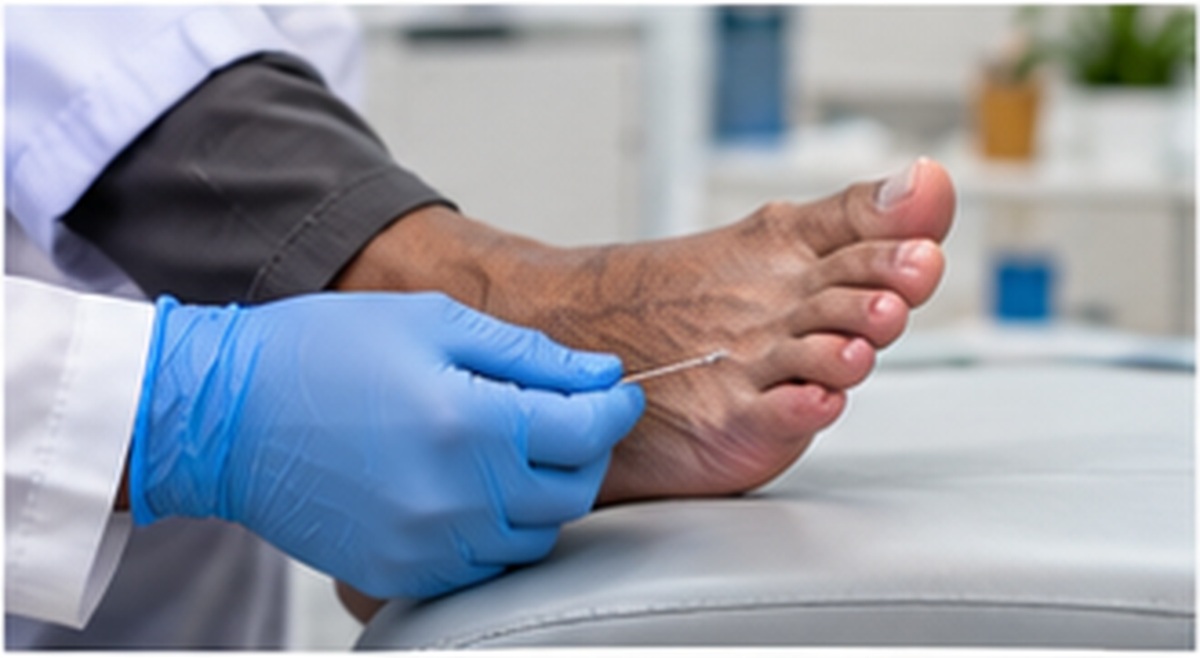
Diabetic Foot Care
Diabetes can affect the nerves, circulation, skin, and healing ability of the feet. Routine podiatric care can help identify problems early—sometimes before they become painful.
Why Is Diabetic Foot Care Important?
Peripheral neuropathy can reduce the ability to feel cuts, blisters, heat, or pressure injuries. Circulation problems may slow healing. Together, these changes can increase the risk of ulcers and infection.
What Should People With Diabetes Watch For?
Check your feet regularly for:
- Cuts or cracks
- Blisters
- Redness
- Swelling
- Drainage
- Skin color changes
- Calluses
- Ingrown nails
- Wounds
- New numbness or burning
Do not walk barefoot, and make sure shoes fit properly.
When Should I Call a Podiatrist?
A new wound, drainage, redness, swelling, warmth, discoloration, or unexplained change should be evaluated promptly.
Diabetic Foot Care FAQs
How often should someone with diabetes see a podiatrist?
The appropriate schedule depends on individual risk factors, including neuropathy, circulation, deformities, and previous ulcers.
Can I trim my own toenails?
Some people can safely do so, but patients with poor vision, neuropathy, circulation problems, or difficult nails should ask a healthcare professional.
Why can a diabetic foot ulcer be painless?
Neuropathy may reduce protective sensation, allowing significant injuries to occur without normal pain signals.
Contact Bay Podiatry Associates
For comprehensive diabetic foot care, preventive evaluations, and treatment of foot-related complications, contact Bay Podiatry Associates in Brooklyn.
Bay Podiatry Associates
8635 21 St Ave Suite 1C, Brooklyn, NY 11214
Phone: (718) 266-1986
Website: baypodiatrybrooklyn.com