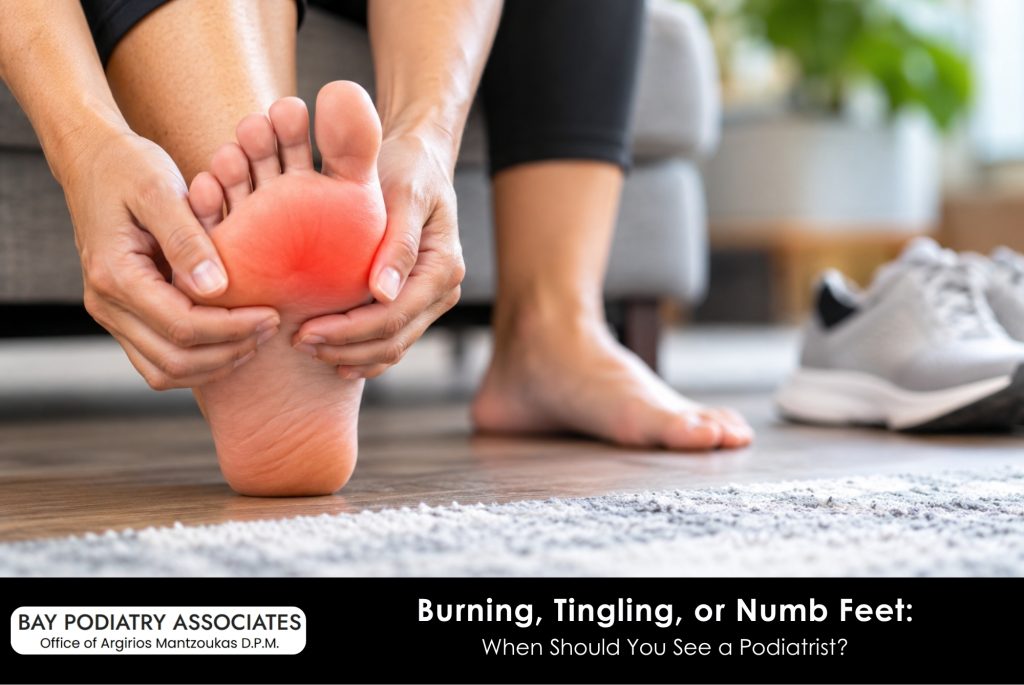
Burning, tingling, numbness, pins-and-needles sensations, or unusual sensitivity in the feet can be easy to dismiss at first. Perhaps your foot simply feels as though it has “fallen asleep.” When these sensations repeatedly occur or do not go away, however, they may indicate an underlying problem involving the nerves, circulation, musculoskeletal system, or another medical condition.
Peripheral neuropathy is one potential cause, but numbness and burning in the feet can have multiple explanations. Determining why the symptoms are occurring is important because treatment depends on the underlying cause.
Bay Podiatry Associates in Brooklyn, NY evaluates foot symptoms including numbness, tingling, burning, and changes in sensation.
What Causes Burning, Tingling, and Numbness in the Feet?
These sensations are often associated with changes in nerve function, although nerve disorders are not the only possible cause.
Potential causes include:
- Peripheral neuropathy
- Diabetes
- Nerve compression or entrapment
- Certain vitamin deficiencies
- Medication side effects
- Alcohol-related nerve damage
- Certain systemic diseases
- Circulation problems
- Foot or ankle injuries
- Pressure on a nerve
Because many conditions can produce similar symptoms, diagnosis should focus on identifying the underlying problem rather than simply treating the sensation itself.
What Is Peripheral Neuropathy?
Peripheral neuropathy refers to damage or dysfunction involving peripheral nerves—the nerves outside the brain and spinal cord.
Symptoms may include numbness, burning, tingling, shooting pain, unusual sensitivity, muscle weakness, or decreased ability to recognize temperature and injury.
Symptoms frequently begin in the toes and feet and may progress over time depending on the underlying cause.
What Does Neuropathy Feel Like?
Patients describe neuropathy differently.
Some report burning feet, while others describe pins and needles, electric-like sensations, stabbing pain, or the feeling that they are wearing socks even when barefoot.
Others experience primarily numbness.
Loss of sensation is particularly important because a person may not recognize a cut, blister, pressure area, or other injury.
Diabetes and Numb Feet
Diabetes is an important cause of peripheral neuropathy. Persistently elevated blood glucose can damage nerves over time.
Diabetic neuropathy frequently affects the feet and legs and may reduce protective sensation.
A patient who cannot adequately feel pain or pressure may develop a blister or wound without realizing it. If healing is also impaired, seemingly minor injuries can become significant medical concerns.
Routine foot care is therefore an important part of diabetes management.
Could a Pinched Nerve Cause Tingling in the Foot?
Yes. A nerve can become compressed or irritated at different locations, producing symptoms that travel into the foot or toes.
The location and pattern of symptoms can provide important diagnostic clues.
A podiatrist can evaluate the foot and ankle to determine whether a local nerve problem may be contributing to symptoms and whether additional evaluation is needed.
Why Do My Feet Burn More at Night?
Some people with neuropathic symptoms notice that burning, tingling, or pain seems more pronounced at night.
Reduced distractions may make symptoms more noticeable, and certain nerve disorders can produce nighttime symptoms.
Persistent nighttime burning deserves evaluation rather than being assumed to be normal.
Why Is Foot Numbness Potentially Dangerous?
Pain is one of the body’s warning systems. When protective sensation decreases, injuries can occur without producing the discomfort that would normally alert someone to a problem.
A person with significant numbness may fail to notice:
- Blisters
- Cuts
- Burns
- Pressure sores
- Foreign objects in a shoe
- Skin breakdown
- Infections
This is particularly concerning for patients with diabetes or impaired circulation.
How Are Numbness and Burning Feet Evaluated?
Evaluation begins with a medical and symptom history.
A podiatric examination may assess skin condition, circulation, sensation, reflexes, muscle strength, foot structure, and areas where nerves may be compressed.
Additional testing or referral may be appropriate depending on the suspected cause.
Can Neuropathy Be Treated?
Treatment depends heavily on what is causing the neuropathy.
When an underlying condition can be identified, addressing that condition may help prevent additional nerve damage or improve symptoms. Other treatments may focus on symptom management, foot protection, and reducing the risk of complications.
For people who have lost protective sensation, preventing injuries becomes especially important.
How Can People With Numb Feet Protect Their Feet?
Patients with reduced sensation should inspect their feet regularly for skin changes, cuts, blisters, redness, swelling, and wounds.
Shoes should also be checked for foreign objects or rough areas before they are worn.
People with diabetes or significant neuropathy should follow individualized recommendations from their healthcare providers regarding preventive foot care.
When Should You See a Podiatrist?
Schedule an evaluation when numbness, burning, or tingling persists, repeatedly occurs, spreads, worsens, or is accompanied by changes in balance or muscle strength.
A new wound, infection, discoloration, or significant swelling in a numb foot deserves prompt medical attention.
Sudden numbness associated with weakness or other acute neurological symptoms may require emergency medical evaluation.
Frequently Asked Questions About Burning, Tingling, and Numb Feet
Why are my feet tingling?
Tingling can result from temporary nerve pressure, peripheral neuropathy, diabetes, nerve compression, certain nutritional deficiencies, medications, and other conditions.
Are numb feet a sign of diabetes?
They can be. Diabetes is an important cause of peripheral neuropathy, but numbness can occur for many other reasons as well.
Can neuropathy start in the toes?
Yes. Peripheral neuropathy often begins in the toes or feet.
Can neuropathy affect only one foot?
Some causes of nerve symptoms can affect one foot or a specific nerve distribution. Others produce symptoms in both feet. The pattern can help with diagnosis.
Why do my feet feel like they’re burning even though they aren’t hot?
Abnormal nerve signals can create a burning sensation without an external source of heat.
Can numbness make foot wounds more dangerous?
Yes. Reduced sensation can prevent a person from noticing an injury, allowing a wound to worsen before it is discovered.
Should people with neuropathy walk barefoot?
Patients with significant loss of protective sensation may be advised to avoid walking barefoot because cuts, burns, or punctures may go unnoticed.
Should I see a podiatrist if my feet are numb but don’t hurt?
Yes, particularly when numbness persists. Lack of pain does not necessarily mean there is no problem.
Contact Information
If you are experiencing persistent burning, tingling, numbness, or other unusual sensations in your feet, Bay Podiatry Associates can evaluate your symptoms and help determine appropriate next steps.
Bay Podiatry Associates
8635 21 St Ave Suite 1C
Brooklyn, NY 11214
Phone: (718) 266-1986
Website: baypodiatrybrooklyn.com
Book Online: baypodiatrybrooklyn.com/appointments/