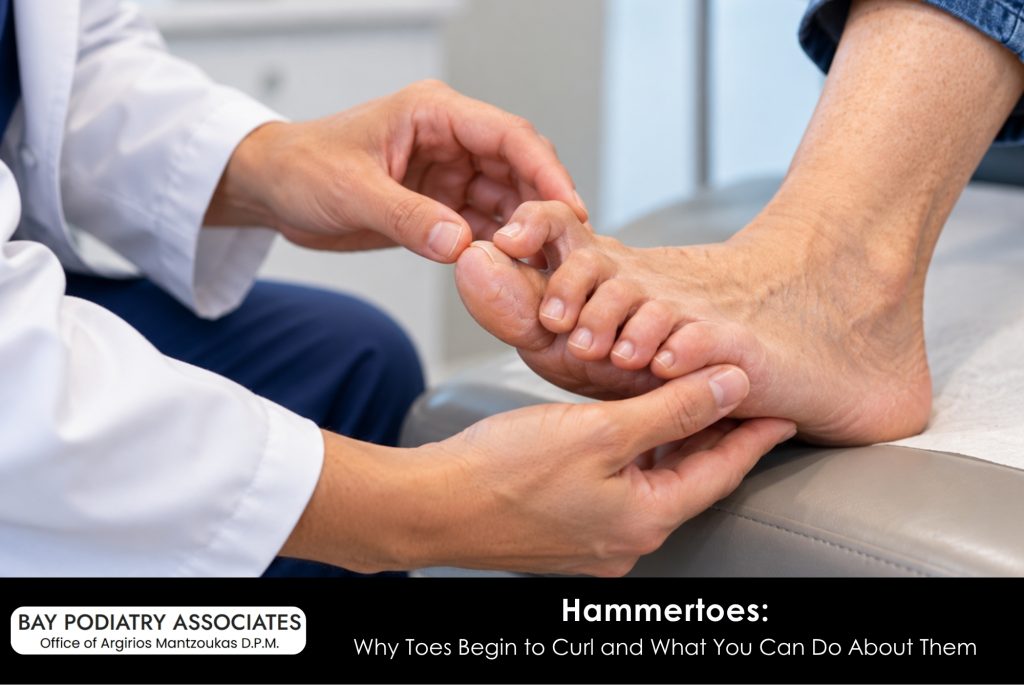
A toe that begins to bend or curl can eventually create more than a cosmetic concern. Hammertoes can rub against shoes, develop painful corns, become stiff, and change how weight is distributed across the front of the foot.
In early stages, a hammertoe may remain flexible. Over time, however, the joint can become increasingly rigid.
Bay Podiatry Associates in Brooklyn, NY evaluates hammertoes and other toe deformities and helps patients understand conservative and surgical treatment options.
What Is a Hammertoe?
A hammertoe is a deformity in which one or more smaller toes bend abnormally at one or more joints.
The toe may appear curled or raised rather than lying flat.
The second, third, and fourth toes are commonly affected.
Why Do Hammertoes Develop?
Hammertoes can develop because of an imbalance between the muscles and tendons that control toe position.
Contributing factors may include:
- Foot structure
- Bunions
- Tight shoes
- Long toes
- Flat feet
- High arches
- Arthritis
- Neuromuscular conditions
- Previous injury
Can Tight Shoes Cause Hammertoes?
Tight shoes can worsen or contribute to toe crowding, especially when the toes are forced into a bent position for long periods.
However, underlying biomechanics and inherited foot structure often play important roles.
What Does a Hammertoe Feel Like?
Symptoms may include:
- Toe pain
- Corns on top of the toe
- Calluses beneath the forefoot
- Redness
- Shoe irritation
- Stiffness
- Difficulty straightening the toe
- Pain during walking
What Is the Difference Between a Flexible and Rigid Hammertoe?
A flexible hammertoe can still be manually straightened.
A rigid hammertoe has become fixed and can no longer be fully straightened.
Treatment options may differ depending on flexibility.
Can Hammertoes Cause Corns?
Yes.
The raised joint can rub against the top of a shoe, causing a painful corn.
Pressure can also shift to the tip of the toe or ball of the foot.
Can Bunions Cause Hammertoes?
They can contribute.
As the big toe shifts toward the smaller toes, crowding may alter the position of the second toe.
This may contribute to hammertoe formation.
Can Hammertoes Be Treated Without Surgery?
Yes, especially when the toe remains flexible and symptoms are mild.
Conservative options may include:
- Wider shoes
- Padding
- Toe sleeves
- Orthotics
- Callus care
- Activity modification
- Stretching or exercises in selected cases
These measures may improve comfort but do not always permanently correct the deformity.
Do Toe Straighteners Work?
Some devices may reduce friction or temporarily improve positioning.
They generally do not permanently correct a rigid structural deformity.
When Is Surgery Considered?
Surgery may be considered when the toe is rigid, painful, repeatedly develops corns or wounds, or interferes significantly with footwear and walking.
The procedure depends on the type and severity of the deformity.
Are Hammertoes More Concerning for People With Diabetes?
Yes.
Pressure from a rigid toe can cause skin breakdown, especially when neuropathy reduces sensation.
Corns and calluses should be monitored carefully.
When Should You See a Podiatrist?
Seek evaluation when a hammertoe:
- Becomes painful
- Is getting more rigid
- Causes corns
- Rubs against shoes
- Produces skin breakdown
- Interferes with walking
- Is associated with diabetes or neuropathy
Frequently Asked Questions About Hammertoes
Why are my toes starting to curl?
Muscle and tendon imbalance, foot structure, bunions, and shoe pressure can all contribute.
Can hammertoes get worse over time?
Yes. A flexible toe can become more rigid as the deformity progresses.
Can hammertoes be reversed without surgery?
Flexible deformities may respond to conservative measures, but established rigid hammertoes generally cannot be fully corrected without surgery.
Are hammertoes caused by tight shoes?
Tight shoes can aggravate and contribute to the condition, but they are often not the only cause.
Can hammertoes cause pain in the ball of the foot?
Yes. Altered pressure distribution can increase forefoot discomfort.
Can orthotics help hammertoes?
They may help selected patients by improving pressure distribution and mechanics.
Should I remove a corn on a hammertoe myself?
Aggressive self-treatment can injure the skin, especially in high-risk patients.
When does a hammertoe need surgery?
Surgery may be considered when pain, rigidity, or recurrent skin problems persist despite conservative care.
Can hammertoes come back after treatment?
Recurrence is possible, especially if underlying mechanical factors remain.
Contact Information
If curled or painful toes are causing shoe irritation, corns, or difficulty walking, Bay Podiatry Associates can evaluate the deformity and discuss treatment options.
Bay Podiatry Associates
8635 21 St Ave Suite 1C
Brooklyn, NY 11214
Phone: (718) 266-1986
Website: baypodiatrybrooklyn.com
Book Online: baypodiatrybrooklyn.com/appointments/