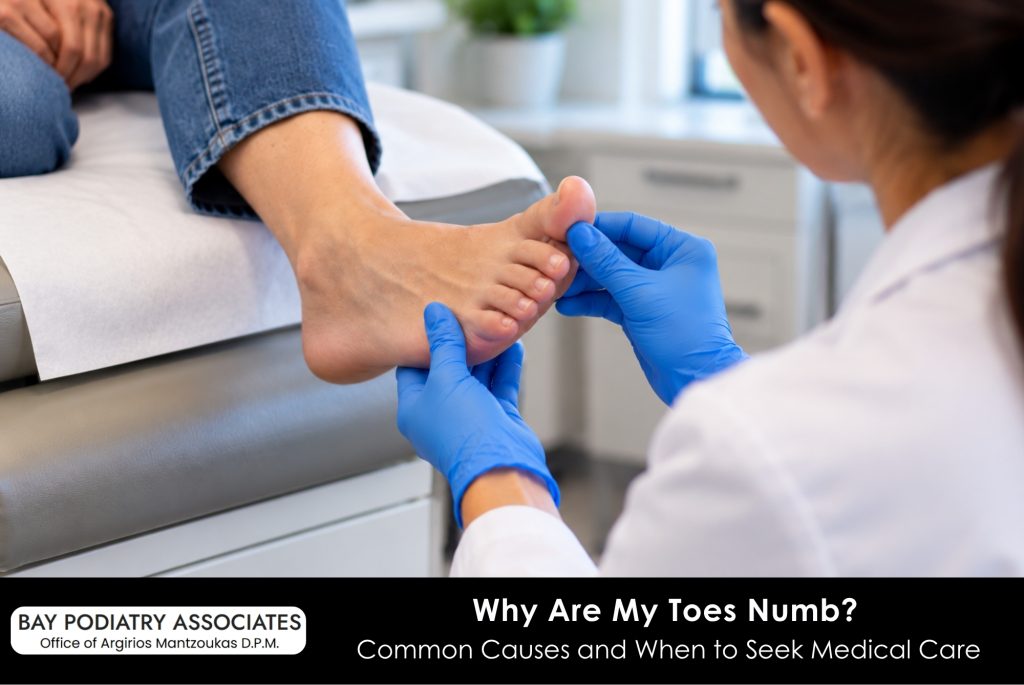
Numbness in the toes can range from a temporary pins-and-needles sensation to persistent loss of feeling. Sometimes the cause is as simple as pressure from tight shoes. In other cases, numb toes may be associated with nerve damage, diabetes, circulation problems, or nerve compression.
Persistent or recurring numbness should not be ignored, particularly when it affects balance or makes injuries harder to detect.
Bay Podiatry Associates in Brooklyn, NY evaluates numbness, tingling, burning, and other changes in foot sensation.
What Causes Numb Toes?
Potential causes include:
- Peripheral neuropathy
- Diabetes
- Tight footwear
- Nerve compression
- Morton’s neuroma
- Back-related nerve problems
- Circulation problems
- Foot or ankle injury
- Vitamin deficiencies
- Certain medications
The pattern and location of numbness may provide clues about the underlying cause.
Can Tight Shoes Make Toes Numb?
Yes.
Shoes that compress the forefoot or toes may place pressure on nerves.
Symptoms may improve after removing the shoes, but persistent numbness deserves evaluation.
Can Diabetes Cause Numb Toes?
Yes.
Diabetic neuropathy commonly begins in the toes and feet.
Patients may experience numbness, tingling, burning, or altered sensitivity.
Can Morton’s Neuroma Cause Toe Numbness?
Yes.
Morton’s neuroma can cause numbness or tingling in the toes, often between the third and fourth toes.
A pebble-like sensation in the ball of the foot may also occur.
Can a Pinched Nerve Cause Numbness?
Yes.
A nerve may become compressed at the foot, ankle, leg, or spine.
The location of the nerve problem influences where symptoms occur.
Can Poor Circulation Cause Numb Toes?
Reduced blood flow may contribute to numbness, coldness, or color changes.
Circulation concerns may require medical evaluation beyond podiatric care.
Why Is Toe Numbness Dangerous?
Loss of sensation can make it difficult to detect:
- Blisters
- Cuts
- Burns
- Pressure areas
- Foreign objects
- Skin breakdown
This is especially important for patients with diabetes or neuropathy.
How Is Toe Numbness Evaluated?
A podiatrist may assess:
- Sensation
- Circulation
- Reflexes
- Foot structure
- Areas of nerve compression
- Muscle strength
- Skin condition
- Medical history
Additional testing may be recommended depending on the suspected cause.
Can Numb Toes Be Treated?
Treatment depends on the underlying condition.
It may include:
- Footwear changes
- Managing diabetes
- Reducing nerve pressure
- Orthotics
- Medication when appropriate
- Referral for further neurological or vascular evaluation
When Should You See a Podiatrist?
Seek evaluation when numbness:
- Persists
- Is worsening
- Affects both feet
- Causes balance problems
- Is associated with burning or pain
- Occurs with diabetes
- Is accompanied by wounds or discoloration
Sudden numbness with weakness or other acute neurological symptoms may require emergency medical care.
Frequently Asked Questions About Numb Toes
Why are my toes numb when I wake up?
Temporary pressure during sleep may cause numbness, but recurrent symptoms should be evaluated.
Can shoes make only one or two toes numb?
Yes. Local nerve compression can affect specific toes.
Is numbness in both feet a sign of neuropathy?
It can be, particularly when symptoms are symmetrical.
Can a bunion cause numbness?
Pressure from footwear or local nerve irritation around a bunion may contribute to altered sensation.
Can numb toes improve?
That depends on the cause and how long nerve dysfunction has been present.
Why do my toes feel numb but not painful?
Neuropathy may cause loss of sensation without pain.
Can numb toes affect balance?
Yes. Reduced sensation can make it harder to sense foot position.
Should I worry about numb toes if I have diabetes?
Persistent numbness should be discussed with a healthcare professional because it may indicate neuropathy.
When should toe numbness be urgent?
Sudden numbness with weakness, severe swelling, major discoloration, or other acute symptoms requires prompt medical evaluation.
Contact Information
If numb or tingling toes are becoming persistent or affecting your walking, Bay Podiatry Associates can evaluate the cause and recommend appropriate next steps.
Bay Podiatry Associates
8635 21 St Ave Suite 1C
Brooklyn, NY 11214
Phone: (718) 266-1986
Website: baypodiatrybrooklyn.com
Book Online: baypodiatrybrooklyn.com/appointments/