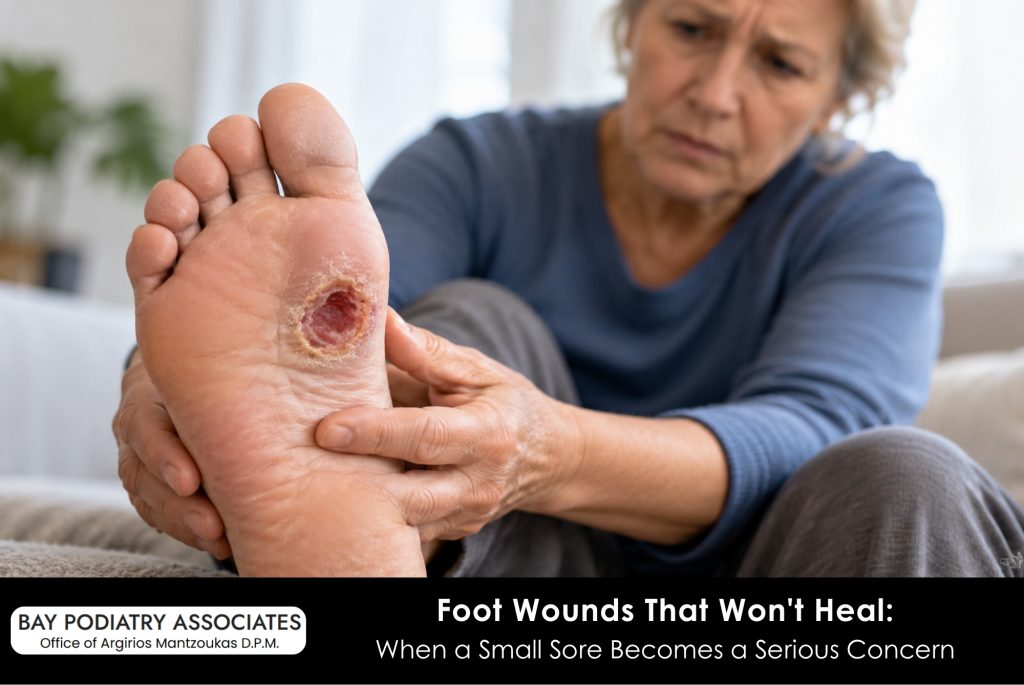
A blister, cut, scrape, or small sore on the foot may initially seem minor. Most uncomplicated wounds begin healing normally with appropriate care. When a foot wound does not improve, repeatedly opens, becomes deeper, or develops signs of infection, however, it deserves medical attention.
Non-healing foot wounds are particularly concerning for people with diabetes, neuropathy, or circulation problems. A person who has reduced sensation may not realize a wound is present until it has already progressed.
Bay Podiatry Associates in Brooklyn, NY evaluates and manages foot wounds and can help patients understand the factors that may be interfering with healing.
What Is a Non-Healing Foot Wound?
A non-healing or chronic wound is one that does not progress through the expected stages of healing appropriately.
Rather than steadily becoming smaller and healthier, the wound may remain open, worsen, drain, repeatedly break down, or develop unhealthy tissue.
The appropriate healing timeline varies according to the wound and the patient’s overall health, which is why a persistent foot sore should be professionally evaluated.
Why Are Foot Wounds Different?
Feet face unique challenges during wound healing.
They regularly bear body weight and encounter pressure, friction, and repetitive movement. Shoes can add additional pressure to vulnerable areas.
The feet are also particularly susceptible to complications from neuropathy and peripheral circulation problems.
Diabetes Is an Important Risk Factor
Diabetes can affect wound healing in several ways.
Some people with diabetes develop peripheral neuropathy, which reduces sensation in the feet. Others may have impaired circulation or other health factors that make healing more difficult.
When pain sensation is reduced, a person may continue walking on an injured area without realizing additional damage is occurring.
What Is a Diabetic Foot Ulcer?
A diabetic foot ulcer is an open wound or sore occurring in a person with diabetes, often on an area exposed to repetitive pressure.
Neuropathy, foot deformities, abnormal pressure, and circulation problems can contribute to ulcer formation or interfere with healing.
Diabetic foot ulcers should be taken seriously because they can become infected and, in severe cases, lead to limb-threatening complications.
How Can Neuropathy Cause a Foot Wound?
Neuropathy does not necessarily create the wound directly. Instead, loss of protective sensation makes injuries more difficult to detect.
For example, a patient may not notice:
- A blister caused by a shoe
- A small cut
- Excessive pressure beneath a callus
- A foreign object inside a shoe
- A burn from a hot surface
- Skin cracking or breakdown
Continued pressure can cause the damaged area to become larger or deeper.
How Does Circulation Affect Wound Healing?
Healing tissue requires oxygen and nutrients supplied through the bloodstream.
When circulation to the lower extremities is impaired, wounds may heal more slowly or have difficulty healing.
A podiatric wound evaluation may therefore include assessment of circulation as well as the wound itself.
What Are Signs That a Foot Wound May Be Infected?
Potential signs of infection include increasing redness, warmth, swelling, drainage, odor, worsening pain, or changes in the appearance of surrounding tissue.
Fever or systemic illness may indicate a more significant infection.
Importantly, patients with neuropathy may have a serious wound without experiencing substantial pain.
Why Is Pressure Relief Important?
Repeated pressure can prevent a wound from healing.
Depending on the location and type of wound, offloading techniques may be used to reduce pressure on the affected area.
This is particularly important for wounds located on weight-bearing portions of the foot.
How Are Foot Wounds Evaluated?
A podiatrist may evaluate:
- Wound size and depth
- Location
- Surrounding skin
- Drainage
- Signs of infection
- Circulation
- Sensation
- Pressure points
- Foot deformities
- Overall risk factors
Additional testing or imaging may be needed depending on the wound’s appearance and severity.
How Are Non-Healing Foot Wounds Treated?
Treatment is individualized and may involve wound cleaning, removal of unhealthy tissue when appropriate, dressings, pressure reduction, infection management, and treatment of underlying contributing conditions.
Complex wounds may require coordination among multiple healthcare professionals.
The objective is not only to close the existing wound but also to address factors that could cause it to recur.
Why Shouldn’t You Treat a Diabetic Foot Wound Only at Home?
Home wound care without professional evaluation can be risky, particularly when sensation is reduced.
The surface appearance of a wound does not always reveal how deep it extends or whether infection is developing.
People with diabetes should contact an appropriate healthcare professional promptly when they discover an open wound, blister, or concerning skin breakdown.
How Can Foot Wounds Be Prevented?
Prevention is especially important for high-risk patients.
Helpful practices may include inspecting the feet daily, wearing appropriate footwear, checking shoes before putting them on, avoiding walking barefoot when protective sensation is reduced, managing diabetes as directed, and attending recommended foot examinations.
Calluses, nail problems, and areas of repeated pressure should also be monitored.
When Is a Foot Wound an Emergency?
A rapidly worsening wound, spreading redness, significant swelling, discoloration, foul drainage, fever, chills, or other signs of serious infection require prompt medical attention.
Patients with diabetes, neuropathy, or impaired circulation should have a lower threshold for seeking professional care.
Frequently Asked Questions About Non-Healing Foot Wounds
Why isn’t the sore on my foot healing?
Persistent wounds can be related to repeated pressure, infection, neuropathy, impaired circulation, diabetes, or other factors that interfere with normal healing.
How long should a foot wound take to heal?
Healing time varies considerably according to the wound’s size, depth, location, cause, circulation, pressure exposure, infection status, and the patient’s overall health. A wound that is not clearly improving should be evaluated.
Can a diabetic foot ulcer hurt?
It can, but some diabetic ulcers cause little or no pain because neuropathy has reduced sensation.
Can a tiny foot wound become serious?
Yes. Small wounds can worsen, particularly when they become infected or occur in patients with impaired sensation or circulation.
What does an infected foot wound look like?
Possible signs include redness, swelling, warmth, drainage, odor, worsening tissue appearance, and spreading inflammation.
Should I put peroxide on a foot ulcer?
Do not assume that common household wound products are appropriate for a chronic or diabetic foot ulcer. The safest wound-care method depends on the wound and should be directed by a healthcare professional.
Why is taking pressure off a foot ulcer important?
Walking repeatedly on a wound can damage healing tissue. Reducing pressure may be an important component of treatment for certain ulcers.
Should someone with diabetes see a podiatrist for a blister?
A blister can progress without being noticed when sensation is impaired. People with diabetes—particularly those with neuropathy, circulation problems, or previous ulcers—should seek individualized medical guidance for new foot injuries.
Can a healed foot ulcer come back?
Yes. Recurrence can occur if the underlying pressure, footwear issue, deformity, neuropathy, or other contributing factor remains.
When should I seek immediate medical attention for a foot wound?
Seek prompt medical care for rapidly spreading redness, substantial swelling, discoloration, fever, chills, significant drainage, worsening infection, or other rapidly progressing symptoms.
Contact Information
A foot wound that is not healing should not be ignored. Bay Podiatry Associates provides podiatric evaluation and wound care for patients in Brooklyn, NY.
Bay Podiatry Associates
8635 21 St Ave Suite 1C
Brooklyn, NY 11214
Phone: (718) 266-1986
Website: baypodiatrybrooklyn.com
Book Online: baypodiatrybrooklyn.com/appointments/