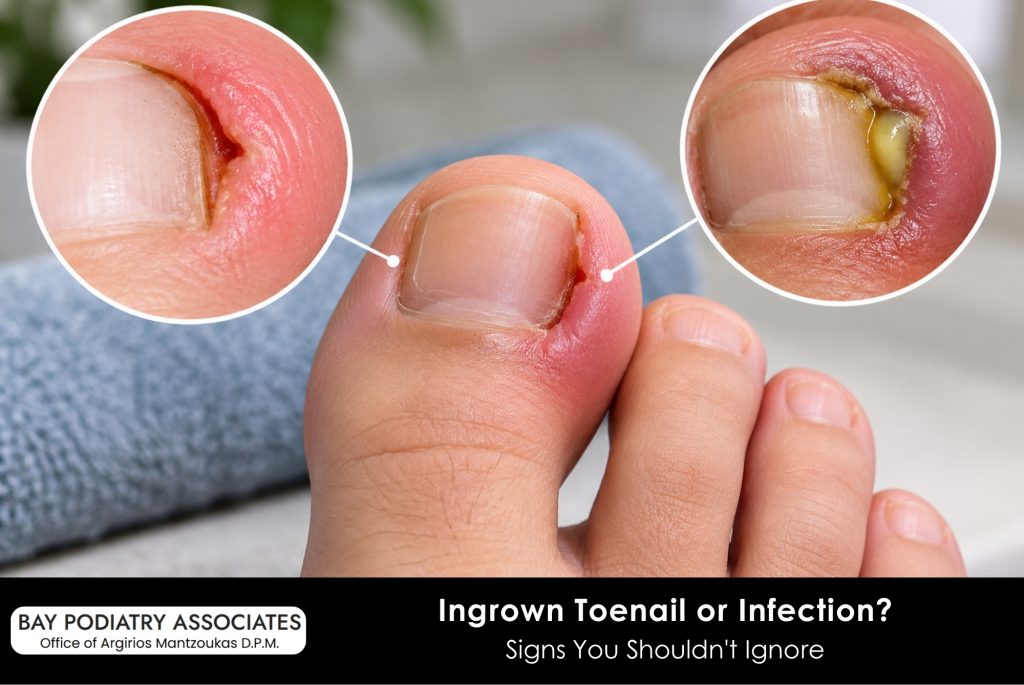
An ingrown toenail can begin as mild tenderness along the edge of a toe. Before long, wearing shoes may become uncomfortable, the surrounding skin may become red and swollen, and what initially seemed like a minor nail problem may begin showing signs of infection.
Ingrown toenails are common, particularly in the big toes. Although mild cases may sometimes improve with conservative care, persistent, recurrent, or infected ingrown nails should be evaluated by a podiatrist.
Bay Podiatry Associates in Brooklyn, NY evaluates ingrown toenails and other nail and skin conditions affecting the feet.
What Is an Ingrown Toenail?
An ingrown toenail occurs when the edge or corner of the nail presses into or penetrates the surrounding skin.
The body’s response can cause tenderness, inflammation, redness, and swelling.
If the skin is broken, bacteria may enter the area and cause infection.
What Does an Ingrown Toenail Feel Like?
Early symptoms may include tenderness when pressure is placed along one side of the nail.
As the condition progresses, symptoms can include:
- Increasing pain
- Redness
- Swelling
- Tenderness
- Inflamed tissue along the nail
- Drainage
- Difficulty wearing shoes comfortably
Symptoms can worsen when the toe is repeatedly compressed by footwear.
What Causes Ingrown Toenails?
Several factors can contribute.
Common causes include improper nail trimming, tight or narrow footwear, nail trauma, naturally curved nails, and repetitive pressure on the toes.
Some people are simply more susceptible because of their nail shape or foot structure.
Can Cutting Toenails Too Short Cause Ingrown Nails?
Yes. Cutting nails excessively short or rounding deeply into the corners can encourage the nail edge to grow into surrounding skin.
Toenails are generally best trimmed relatively straight across rather than aggressively cutting into the corners.
Individual circumstances vary, especially for patients with diabetes or circulation problems, who may need professional nail care.
How Can You Tell if an Ingrown Toenail Is Infected?
Possible signs include increasing redness, warmth, swelling, drainage, worsening pain, or tissue that becomes increasingly inflamed around the nail.
An infection should not be ignored, especially in patients with diabetes, neuropathy, impaired circulation, or immune system problems.
Why Do Ingrown Toenails Keep Coming Back?
Recurrent ingrown nails may be related to nail shape, trimming habits, footwear, repeated trauma, or the way the nail grows.
Repeatedly cutting away the painful corner at home may temporarily reduce pressure without addressing the underlying tendency for the nail to become ingrown again.
How Does a Podiatrist Treat an Ingrown Toenail?
Treatment depends on severity.
For a painful or recurrent ingrown toenail, a podiatrist may remove the problematic portion of the nail. In certain recurrent cases, a procedure may be recommended to reduce the likelihood that the troublesome nail edge will grow back.
Treatment recommendations depend on the individual patient’s condition and medical history.
Should You Dig Out an Ingrown Toenail Yourself?
Trying to dig deeply into the nail corner with clippers or another instrument can injure the skin and potentially introduce infection.
This can be especially risky for patients with diabetes, neuropathy, poor circulation, or impaired healing.
Can Tight Shoes Make an Ingrown Toenail Worse?
Yes. Shoes that compress the toes can increase pressure against an already irritated nail fold.
Appropriate toe-box space can help reduce unnecessary pressure.
Are Ingrown Toenails More Concerning for People With Diabetes?
Yes.
Diabetes can be associated with neuropathy, impaired circulation, and delayed wound healing. A small nail-related injury may therefore carry greater risk in some patients with diabetes.
Patients with diabetes should seek professional guidance rather than performing aggressive “bathroom surgery” on a painful nail.
When Should You See a Podiatrist?
Consider podiatric evaluation when an ingrown nail is painful, recurrent, increasingly swollen, draining, or showing signs of infection.
Patients with diabetes, neuropathy, or circulation problems should seek care promptly for nail problems that break or irritate the surrounding skin.
Frequently Asked Questions About Ingrown Toenails
Will an ingrown toenail go away on its own?
Some mild cases may improve, but persistent or recurrent ingrown nails often require professional treatment.
How do I know if my ingrown toenail is infected?
Increasing redness, warmth, swelling, drainage, worsening pain, and spreading inflammation may indicate infection.
Why does my big toenail keep becoming ingrown?
Nail shape, trimming technique, footwear, repetitive trauma, and other factors may contribute to recurrence.
Should I cut the corner out of an ingrown toenail?
Aggressively cutting into the corner can worsen the problem or injure surrounding tissue. A podiatrist can safely evaluate persistent ingrown nails.
Can an ingrown toenail cause a serious infection?
Infection can become more significant if it spreads, particularly in patients with diabetes, circulation problems, or impaired immune function.
Does removing part of an ingrown toenail hurt?
Podiatric procedures can generally be performed using appropriate local anesthesia when needed. Your podiatrist can explain what to expect.
Can an ingrown toenail come back after treatment?
Yes, depending on the treatment and underlying nail-growth pattern. Certain procedures are designed to reduce recurrence in problematic nail borders.
What shoes should I wear with an ingrown toenail?
Footwear that provides adequate room for the toes can reduce unnecessary pressure on the affected area.
Should someone with diabetes treat an ingrown toenail at home?
People with diabetes—particularly those with neuropathy or circulation problems—should avoid aggressive self-treatment and seek professional guidance.
Contact Information
If you have a painful, recurrent, or potentially infected ingrown toenail, contact Bay Podiatry Associates for an evaluation.
Bay Podiatry Associates
8635 21 St Ave Suite 1C
Brooklyn, NY 11214
Phone: (718) 266-1986
Website: baypodiatrybrooklyn.com
Book Online: baypodiatrybrooklyn.com/appointments/