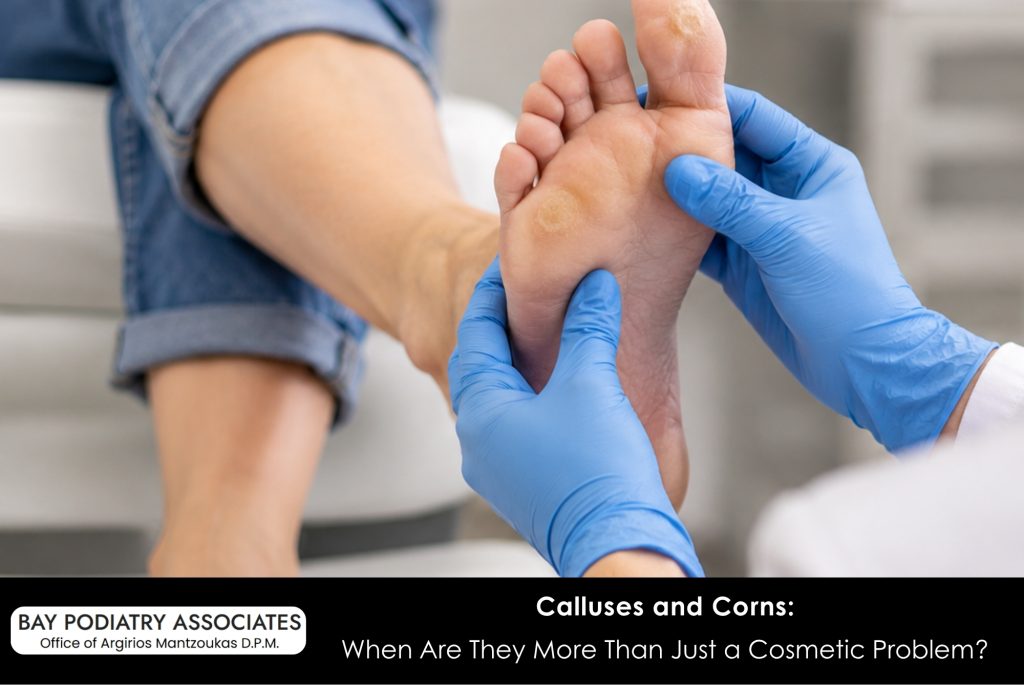
Calluses and corns are common areas of thickened skin that develop in response to repeated pressure or friction. In many cases, they are more annoying than dangerous. But when they become painful, repeatedly return, crack, bleed, or develop in someone with diabetes, neuropathy, or poor circulation, they deserve more attention.
These thickened areas can also be valuable clues about how pressure is being distributed across the foot.
Bay Podiatry Associates in Brooklyn, NY evaluates painful calluses and corns and helps determine whether an underlying foot structure or biomechanical problem may be contributing.
What Is a Callus?
A callus is an area of thickened skin that develops in response to repeated pressure.
Calluses commonly form on:
- The ball of the foot
- The heel
- The sides of the feet
- Areas over bony prominences
They are usually broader and flatter than corns.
What Is a Corn?
A corn is a more concentrated area of thickened skin, often with a central core.
Corns commonly form:
- On top of toes
- Between toes
- Along the sides of toes
- Over prominent joints
They are often caused by shoe pressure or toe deformities such as hammertoes.
Why Do Calluses and Corns Form?
Common contributing factors include:
- Tight shoes
- Repetitive friction
- Abnormal pressure distribution
- Bunions
- Hammertoes
- Flat feet
- High arches
- Prominent bones
- Walking mechanics
- Occupational or athletic activity
Simply removing the thickened skin may not prevent it from returning if the pressure remains.
Are Calluses Harmless?
Not always.
A callus can become painful when it becomes thick or develops over an area of excessive pressure.
In patients with neuropathy, a callus can sometimes hide deeper tissue damage or an ulcer.
Why Are Calluses More Concerning in Diabetes?
Diabetes can be associated with reduced sensation, poor circulation, and delayed wound healing.
A patient with neuropathy may not feel painful pressure beneath a callus.
This can allow skin breakdown to progress without obvious symptoms.
Can a Callus Turn Into an Ulcer?
Yes.
Repeated pressure can damage tissue beneath a thick callus.
In high-risk patients, this can contribute to ulcer formation.
Should You Cut a Callus Off at Home?
Aggressively cutting or shaving a callus can injure healthy skin and increase infection risk.
This is particularly dangerous for patients with diabetes, neuropathy, poor circulation, or impaired healing.
Can Corns Develop Between the Toes?
Yes.
Soft corns can form between the toes when adjacent toes rub against each other.
Moisture and pressure can make them especially uncomfortable.
How Are Calluses and Corns Treated?
Treatment depends on the cause.
It may include:
- Professional reduction of thickened skin
- Padding
- Footwear changes
- Orthotics
- Pressure redistribution
- Treatment of bunions or hammertoes
- Skin care recommendations
The goal is not only to reduce the thick skin but also to address why it keeps developing.
Can Better Shoes Prevent Corns?
They may help.
Shoes with adequate toe room and proper width can reduce friction and pressure.
Patients with toe deformities may need specialized modifications or treatment.
When Should You See a Podiatrist?
Seek evaluation if a callus or corn is:
- Painful
- Recurrent
- Cracked
- Bleeding
- Located over a deformity
- Associated with diabetes
- Associated with numbness
- Difficult to manage safely
Frequently Asked Questions About Calluses and Corns
What is the difference between a corn and a callus?
Calluses are usually broader areas of thickened skin, while corns are smaller and often have a central core.
Why do calluses keep coming back?
Repeated pressure or friction usually remains present, so the skin thickens again.
Can calluses be caused by flat feet?
Yes. Abnormal pressure distribution from foot mechanics can contribute.
Can a callus be painful?
Yes. Thick calluses can create significant pressure on underlying tissues.
Are corns contagious?
No. Corns are caused by pressure and friction, not infection.
Is it safe to use medicated corn pads?
These products may irritate healthy skin and can be risky for patients with diabetes or reduced circulation. Professional guidance is safer when risk factors are present.
Can a podiatrist remove a callus?
Yes. A podiatrist can safely reduce thickened tissue and assess why it developed.
Can a callus hide an ulcer?
Yes, especially in patients with neuropathy.
When should a diabetic patient seek care for a callus?
A person with diabetes should seek professional guidance when a callus becomes painful, discolored, cracked, draining, or associated with reduced sensation.
Contact Information
If painful calluses or corns keep returning, Bay Podiatry Associates can evaluate the pressure pattern and recommend treatment that addresses both the skin and the underlying cause.
Bay Podiatry Associates
8635 21 St Ave Suite 1C
Brooklyn, NY 11214
Phone: (718) 266-1986
Website: baypodiatrybrooklyn.com
Book Online: baypodiatrybrooklyn.com/appointments/