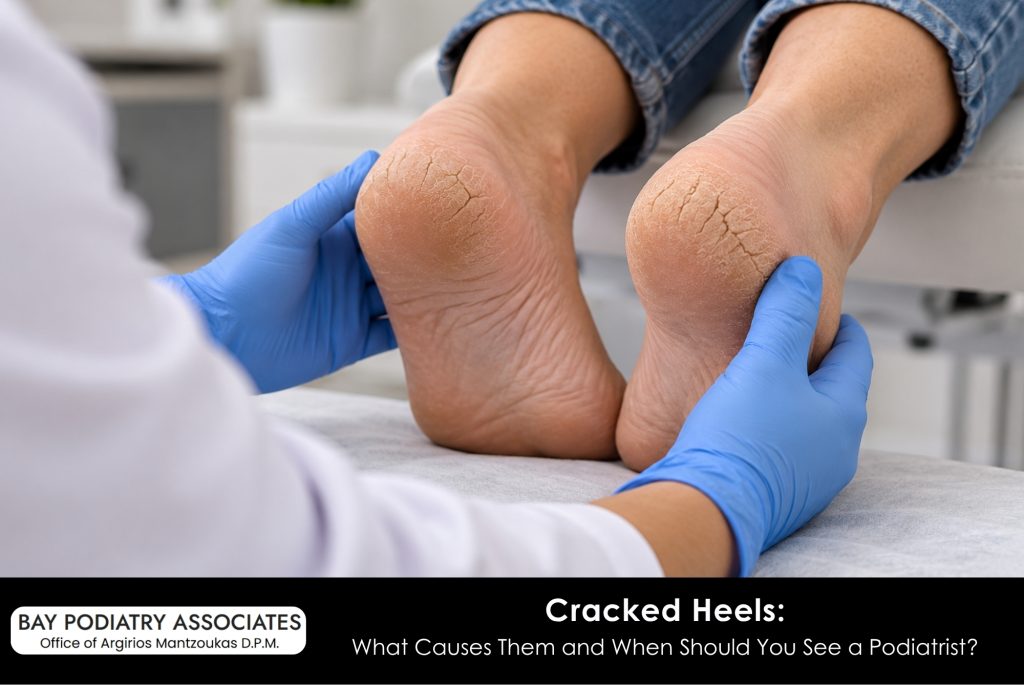
Dry, cracked heels are common, especially during colder weather or when the skin is exposed to repeated pressure. Mild cracking may be mostly cosmetic, but deeper heel fissures can become painful, bleed, and sometimes create an entry point for infection.
Cracked heels can also be more serious for people with diabetes, neuropathy, or poor circulation.
Bay Podiatry Associates in Brooklyn, NY evaluates painful heel fissures and other skin problems affecting the feet.
What Causes Cracked Heels?
Cracked heels develop when dry, thickened skin around the heel loses flexibility.
Pressure from standing or walking can cause the skin to split.
Common contributing factors include:
- Dry skin
- Prolonged standing
- Open-back shoes
- Barefoot walking
- Thick calluses
- Obesity
- Certain skin conditions
- Cold weather
- Aging-related skin changes
Why Does the Skin Around the Heel Become Thick?
Repeated pressure can cause callus formation around the heel rim.
As this thick skin becomes drier and less flexible, it is more likely to crack under pressure.
Are Cracked Heels Painful?
They can be.
Shallow cracks may cause little discomfort, while deeper fissures can hurt during standing and walking.
If a crack reaches deeper layers of skin, it may bleed.
Can Cracked Heels Become Infected?
Yes.
When cracks create an opening in the skin, bacteria may enter.
Signs of infection can include:
- Increasing redness
- Warmth
- Swelling
- Drainage
- Worsening pain
- Foul odor
Why Are Cracked Heels More Concerning in Diabetes?
Diabetes can affect sensation, circulation, and wound healing.
A person with neuropathy may not notice that a crack has become deeper or infected.
Any open skin problem in a high-risk diabetic foot deserves prompt attention.
Can Athlete’s Foot Cause Heel Cracking?
Sometimes.
Fungal skin infections can cause dry, scaly, peeling skin that may contribute to cracking.
A podiatrist can determine whether fungal infection or simple dryness is more likely.
Can Open-Back Shoes Make Cracked Heels Worse?
Yes.
Shoes that leave the heel unsupported may allow the heel pad to spread outward, increasing stress on dry skin.
Supportive footwear may help reduce this pressure.
How Are Cracked Heels Treated?
Treatment depends on severity.
Options may include:
- Professional reduction of thick callus
- Moisturizing agents
- Footwear changes
- Occlusive skin care
- Treatment of fungal infection if present
- Wound care for deeper fissures
- Pressure reduction
Patients should avoid aggressive cutting or scraping.
What Type of Moisturizer Helps Cracked Heels?
Thicker creams or ointments are often more effective than lightweight lotions.
Products containing ingredients such as urea or lactic acid may help soften thickened skin, but not every product is appropriate for every patient.
Should You Use a Pumice Stone?
Gentle use may help some low-risk patients with mild dry skin.
People with diabetes, neuropathy, poor circulation, or open cracks should seek professional advice before using abrasive tools.
When Should You See a Podiatrist?
Seek care when heel cracks:
- Are painful
- Bleed
- Become deep
- Show signs of infection
- Repeatedly return
- Occur in a patient with diabetes
- Do not improve with basic skin care
Frequently Asked Questions About Cracked Heels
Why do my heels keep cracking?
Dry skin, pressure, calluses, footwear, and certain skin conditions can all contribute.
Can cracked heels heal on their own?
Mild cracks may improve with proper skin care, but deeper fissures may need treatment.
Are cracked heels a sign of fungus?
Sometimes, but dry skin alone is also common.
Can cracked heels bleed?
Yes. Deep fissures can extend into more sensitive tissue and bleed.
Is petroleum jelly good for cracked heels?
It can help reduce moisture loss, but additional treatments may be needed for thick callus or deep fissures.
Are open-back sandals bad for cracked heels?
They may worsen heel spreading and pressure in some patients.
Can diabetes make cracked heels dangerous?
Yes. Any open skin injury can be more concerning when sensation or healing is impaired.
Should I cut thick skin off my heels?
No. Cutting the skin at home can cause injury and infection.
When are cracked heels serious?
Deep, bleeding, infected, or persistent cracks deserve professional evaluation.
Contact Information
If cracked heels are painful, bleeding, or not improving, Bay Podiatry Associates can evaluate the skin and recommend appropriate treatment.
Bay Podiatry Associates
8635 21 St Ave Suite 1C
Brooklyn, NY 11214
Phone: (718) 266-1986
Website: baypodiatrybrooklyn.com
Book Online: baypodiatrybrooklyn.com/appointments/