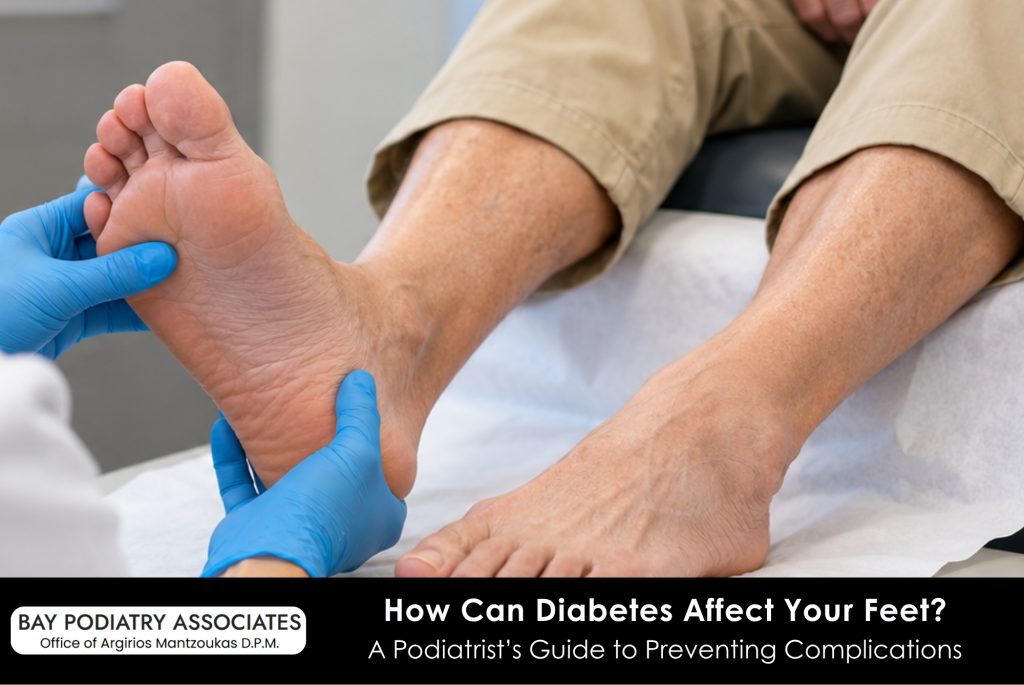
Diabetes can affect many parts of the body, including the feet. Over time, elevated blood glucose levels may damage nerves, affect circulation, and interfere with wound healing. These changes can increase the risk of numbness, skin breakdown, infections, ulcers, and other complications.
Because some diabetes-related foot problems can develop without significant pain, preventive foot care is especially important.
Bay Podiatry Associates in Brooklyn, NY provides diabetic foot care and helps patients identify problems before they become more serious.
Why Are the Feet Vulnerable to Diabetes?
The feet are far from the heart and experience repeated pressure during standing and walking.
Diabetes may affect:
- Nerves
- Blood vessels
- Skin
- Immune response
- Wound healing
- Joint structure
When several of these problems occur together, even a minor injury can become more difficult to heal.
What Is Diabetic Neuropathy?
Diabetic neuropathy is nerve damage associated with diabetes.
Symptoms may include:
- Numbness
- Burning
- Tingling
- Pins and needles
- Shooting pain
- Reduced sensitivity to heat or cold
Some people lose protective sensation and may not feel an injury.
Why Is Loss of Sensation Dangerous?
Pain helps warn the body about injury.
When sensation is reduced, a person may not notice:
- Blisters
- Cuts
- Burns
- Pressure areas
- Sharp objects
- Cracked skin
- Developing ulcers
An unnoticed injury may worsen if the patient continues walking on it.
Can Diabetes Affect Circulation?
Yes.
Diabetes is associated with an increased risk of vascular disease.
Reduced circulation can make it more difficult for injured tissues to receive the oxygen and nutrients needed for healing.
What Is a Diabetic Foot Ulcer?
A diabetic foot ulcer is an open wound that develops on the foot of a person with diabetes.
Ulcers commonly occur in areas of repeated pressure and may be associated with neuropathy, deformity, or circulation problems.
Because ulcers can become infected, early treatment is important.
Can Calluses Be Dangerous for People With Diabetes?
They can be.
A thick callus may indicate excessive pressure.
In patients with neuropathy, tissue beneath a callus may become damaged without causing pain.
Why Should People With Diabetes Avoid Walking Barefoot?
Walking barefoot increases exposure to:
- Cuts
- Burns
- Puncture wounds
- Splinters
- Sharp objects
When sensation is reduced, these injuries may not be noticed immediately.
How Should Someone With Diabetes Inspect Their Feet?
Daily inspection is a useful preventive habit.
Look for:
- Redness
- Blisters
- Cuts
- Swelling
- Drainage
- Cracks
- Calluses
- Nail changes
- Discoloration
A mirror may help with areas that are difficult to see.
How Can Footwear Help?
Properly fitting footwear can reduce friction and pressure.
Shoes should generally:
- Fit comfortably
- Provide adequate toe room
- Avoid rough seams
- Offer appropriate support
- Be inspected for foreign objects before wearing
Why Are Regular Podiatry Visits Important?
Podiatric examinations can help identify:
- Loss of sensation
- Circulation concerns
- Calluses
- Nail problems
- Pressure points
- Deformities
- Wounds
The frequency of visits depends on individual risk factors.
When Should a Person With Diabetes Seek Prompt Foot Care?
Seek care for:
- Open wounds
- Drainage
- Redness
- Swelling
- Warmth
- New discoloration
- Ingrown toenails
- Blisters
- Sudden changes in sensation
Signs of infection require prompt attention.
Frequently Asked Questions About Diabetes and Foot Health
Does everyone with diabetes develop foot problems?
No, but diabetes increases the risk of neuropathy, circulation problems, wounds, and infections in some patients.
Why are foot wounds more dangerous with diabetes?
Reduced sensation, impaired circulation, and slower healing may make wounds more difficult to detect and treat.
Should people with diabetes check their feet every day?
Daily inspection is commonly recommended, especially for those with neuropathy or previous ulcers.
Can people with diabetes trim their own toenails?
Some can, but patients with poor circulation, neuropathy, thick nails, or previous wounds may need professional care.
Can diabetes cause burning feet?
Yes. Burning sensations may be related to diabetic neuropathy.
Are calluses normal in diabetes?
Calluses can occur in anyone, but they deserve closer monitoring in patients with diabetes because they may hide pressure-related tissue damage.
Can diabetic foot ulcers be prevented?
Not every ulcer can be prevented, but good blood glucose management, appropriate footwear, daily inspection, and regular podiatric care may reduce risk.
Why should someone with diabetes avoid heating pads on the feet?
Reduced sensation can make burns more likely because the patient may not recognize excessive heat.
When is a diabetic foot problem an emergency?
Rapidly spreading redness, fever, significant swelling, discoloration, severe drainage, or systemic illness requires urgent medical attention.
Contact Information
If you have diabetes and are concerned about numbness, calluses, wounds, nail problems, or other changes in your feet, Bay Podiatry Associates can provide a comprehensive diabetic foot evaluation.
Bay Podiatry Associates
8635 21 St Ave Suite 1C
Brooklyn, NY 11214
Phone: (718) 266-1986
Website: baypodiatrybrooklyn.com
Book Online: baypodiatrybrooklyn.com/appointments/