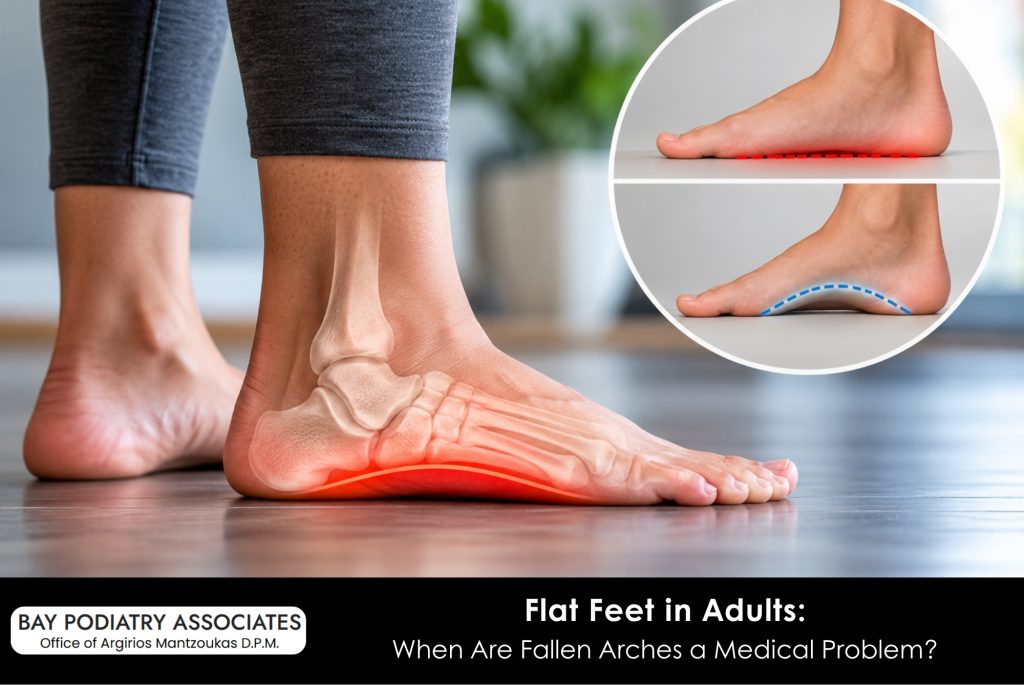
Flat feet are common, and many adults have low arches without experiencing pain or limitation. For others, however, fallen arches can contribute to fatigue, heel pain, ankle discomfort, tendon problems, or changes in the way they walk.
The important question is not simply whether the arch looks flat. It is whether the foot structure is causing symptoms or progressive changes.
Bay Podiatry Associates in Brooklyn, NY evaluates flat feet and other biomechanical problems to determine when treatment may be appropriate.
What Are Flat Feet?
Flat feet occur when the arch of the foot is lower than usual or collapses during standing.
In some people, the arch is low from childhood. Others develop changes later in life.
Flat feet can affect one or both feet.
Are Flat Feet Always a Problem?
No.
Many people have flat feet and remain active without pain.
Treatment is usually considered when flat feet contribute to symptoms, instability, deformity, or changes in function.
What Does Symptomatic Flatfoot Feel Like?
Symptoms may include:
- Arch pain
- Heel pain
- Ankle pain
- Foot fatigue
- Swelling
- Difficulty standing for long periods
- Pain along the inside of the ankle
- Changes in shoe wear
- Reduced endurance with walking
Some patients also develop discomfort farther up the leg.
What Causes Flat Feet in Adults?
Potential causes include:
- Inherited foot structure
- Posterior tibial tendon dysfunction
- Arthritis
- Injury
- Ligament weakness
- Obesity
- Aging-related changes
- Certain medical conditions
Sometimes the cause is multifactorial.
What Is Adult-Acquired Flatfoot?
Adult-acquired flatfoot refers to progressive collapse of the arch that develops after skeletal maturity.
One common cause is dysfunction of the posterior tibial tendon, an important structure that supports the arch.
As the tendon weakens, the foot may gradually flatten and become more difficult to support.
What Is Posterior Tibial Tendon Dysfunction?
The posterior tibial tendon runs along the inside of the ankle and helps support the arch.
When it becomes inflamed, stretched, or weakened, patients may develop pain, swelling, and progressive flattening of the foot.
Early evaluation can be important because the condition may worsen over time.
Can Flat Feet Cause Heel Pain?
Yes.
Changes in foot mechanics may increase stress on the plantar fascia, heel, and other structures.
Flat feet are one possible contributor to plantar fasciitis and other forms of heel pain.
Can Flat Feet Cause Ankle Pain?
Yes.
A collapsing arch can alter ankle alignment and increase strain on tendons and ligaments.
Pain along the inside of the ankle is especially important when posterior tibial tendon dysfunction is suspected.
Do Flat Feet Need Orthotics?
Not always.
Orthotics may help selected patients by supporting the arch, improving pressure distribution, or reducing strain on painful structures.
Some people need only supportive footwear, while others may require additional treatment.
Can Exercises Help Flat Feet?
Strengthening and flexibility exercises may be useful for some patients, depending on the cause and severity.
Exercise alone may not correct a fixed structural deformity.
When Is Surgery Considered?
Surgery may be considered when significant pain or deformity persists despite conservative treatment or when progressive structural changes threaten function.
The specific procedure depends on the type and severity of the flatfoot.
When Should You See a Podiatrist?
Seek evaluation if flat feet are associated with pain, swelling, progressive arch collapse, difficulty walking, or increasing ankle problems.
Sudden changes in one foot should also be assessed.
Frequently Asked Questions About Flat Feet in Adults
Are flat feet normal in adults?
They can be. Many adults have naturally low arches without symptoms.
Can flat feet develop later in life?
Yes. Tendon problems, arthritis, injury, and aging-related changes can lead to adult-acquired flatfoot.
Can flat feet cause plantar fasciitis?
Certain flatfoot mechanics may increase stress on the plantar fascia.
Can flat feet cause knee or back pain?
They may contribute to altered lower-extremity mechanics in some patients, but not all knee or back pain comes from the feet.
Do flat feet always need treatment?
No. Treatment is generally recommended when symptoms or progressive changes are present.
Can orthotics correct flat feet?
Orthotics can support the foot and improve symptoms in selected patients, but they do not always permanently change the underlying structure.
What does posterior tibial tendon pain feel like?
Pain and swelling may occur along the inside of the ankle and arch.
Can flat feet get worse with age?
They can, especially when tendons or ligaments weaken over time.
When should adult flat feet be evaluated?
Pain, swelling, progressive deformity, or difficulty walking are good reasons to seek podiatric evaluation.
Contact Information
If flat feet are causing arch pain, heel pain, ankle discomfort, or fatigue, Bay Podiatry Associates can evaluate your foot structure and recommend appropriate treatment options.
Bay Podiatry Associates
8635 21 St Ave Suite 1C
Brooklyn, NY 11214
Phone: (718) 266-1986
Website: baypodiatrybrooklyn.com
Book Online: baypodiatrybrooklyn.com/appointments/