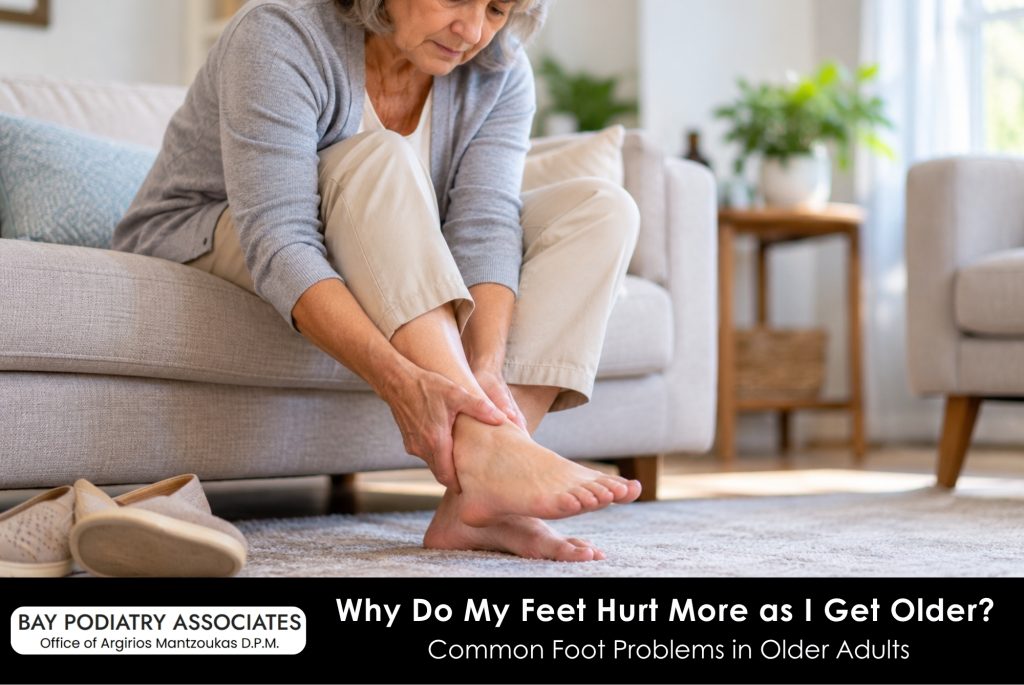
It is common for the feet to change with age, but increasing foot pain should not automatically be accepted as an unavoidable part of getting older.
Over time, cushioning can thin, joints may develop arthritis, tendons can become less flexible, nails can thicken, and changes in balance or circulation may affect foot health.
Bay Podiatry Associates in Brooklyn, NY evaluates age-related foot concerns and helps older adults maintain mobility, comfort, and independence.
How Do Feet Change With Age?
Aging can affect:
- Skin
- Fat padding
- Joints
- Tendons
- Ligaments
- Nails
- Circulation
- Sensation
- Balance
These changes can make certain foot problems more common.
Does the Natural Cushioning in the Feet Get Thinner?
Yes.
The fat pads beneath the heel and forefoot can become thinner over time.
Reduced cushioning may make walking on hard surfaces more uncomfortable and increase sensitivity to pressure.
Is Arthritis More Common With Age?
Yes.
Wear-related osteoarthritis becomes more common over time and can affect the big toe, midfoot, ankle, and other joints.
Previous injuries may increase the risk of post-traumatic arthritis.
Why Do Bunions and Hammertoes Become More Noticeable?
Structural deformities may gradually progress over the years.
Changes in tendons, ligaments, and joint alignment can make bunions and hammertoes more symptomatic.
Why Do Toenails Get Thicker With Age?
Nails may grow more slowly and become thicker or more brittle with age.
Fungal infection, trauma, circulation changes, and other medical conditions may also contribute.
Is Heel Pain Common in Older Adults?
Yes.
Plantar fasciitis, heel pad thinning, arthritis, Achilles problems, and other conditions may cause heel pain.
Can Balance Problems Be Related to the Feet?
Yes.
Pain, neuropathy, arthritis, weakness, and deformity can all affect balance and walking confidence.
Proper footwear and treatment of painful foot conditions may help improve stability.
Why Is Foot Care Important for Older Adults With Diabetes?
Diabetes can increase the risk of neuropathy, wounds, infection, and impaired healing.
Regular foot inspection and prompt treatment of skin or nail problems become especially important.
Can Circulation Problems Affect Aging Feet?
Yes.
Reduced circulation can contribute to:
- Slow wound healing
- Skin changes
- Cold feet
- Discoloration
- Increased risk of complications
New circulation-related symptoms should be medically evaluated.
Can Orthotics Help Older Adults?
They may.
Orthotics can help selected patients improve pressure distribution, support painful arches, or accommodate deformities.
The device should be appropriate for the individual’s foot structure and activity level.
What Kind of Shoes Are Best for Older Adults?
Shoes should generally:
- Fit properly
- Provide enough toe room
- Offer stable support
- Have appropriate cushioning
- Reduce slipping
- Avoid unnecessary pressure points
Patients with significant deformities or neuropathy may need specialized footwear.
When Should Foot Pain Not Be Blamed on Aging?
Persistent pain, wounds, numbness, swelling, deformity, or sudden changes should not be dismissed simply because a person is older.
Many foot problems are treatable and may significantly affect mobility if ignored.
Why Is Mobility So Important?
Foot pain can cause people to walk less.
Reduced mobility can affect strength, balance, cardiovascular health, independence, and overall quality of life.
Addressing painful foot conditions can therefore have benefits beyond the feet themselves.
Frequently Asked Questions About Aging Feet
Is foot pain a normal part of aging?
No. Foot changes are common with age, but persistent pain should still be evaluated.
Why do my feet feel less cushioned than they used to?
The natural fat pads beneath the feet can thin with age.
Do arches fall as people get older?
They can. Tendon and ligament changes may contribute to adult-acquired flatfoot.
Why are my toenails thicker now?
Age-related changes, trauma, fungus, and circulation problems can all contribute.
Are bunions more common in older adults?
Bunions may become more noticeable or symptomatic over time.
Can older adults still benefit from orthotics?
Yes, depending on the condition and biomechanics.
Why do my feet swell more as I age?
Swelling can have many causes and should not simply be attributed to age.
Can foot problems increase fall risk?
Pain, weakness, neuropathy, arthritis, and unstable footwear can all affect balance.
How often should older adults see a podiatrist?
Frequency depends on individual risk factors, symptoms, diabetes status, circulation, and foot conditions.
When should an older adult seek urgent foot care?
Prompt evaluation is important for wounds, infection, sudden swelling, discoloration, severe pain, or inability to bear weight.
Contact Information
If foot pain, nail changes, balance concerns, or other age-related foot problems are affecting mobility, Bay Podiatry Associates can provide a comprehensive podiatric evaluation.
Bay Podiatry Associates
8635 21 St Ave Suite 1C
Brooklyn, NY 11214
Phone: (718) 266-1986
Website: baypodiatrybrooklyn.com
Book Online: baypodiatrybrooklyn.com/appointments/